Tango Energy & Sustainability contains a wide variety of reports within our Reporting module to help you analyze and distribute your energy and sustainability data. Of the over 30 standard reports the platform allows you to generate, 3 are specifically designed for carbon accounting inventories and roll ups of data. Tango allows users to generate custom scope 1 and 2 GHG emissions reports with performance comparisons across portfolios and buildings. Tango calculates market-based and location-based emissions based on the Greenhouse Gas (GHG) Protocol’s Corporate Standard and uses industry-standard emissions factors across commodities in the US and internationally. Scope 1 commodities like natural gas, fuel oil, and propane are all based on the EPA’s Inventory for Greenhouse Gasses. The integrated energy and sustainability functionality of Tango coupled with our automatic ingestion of utility invoice and emissions data allows you to easily calculate your organization’s global warming potentials and scope emissions.
How It Works
Module: Reporting
Relevant Reports:
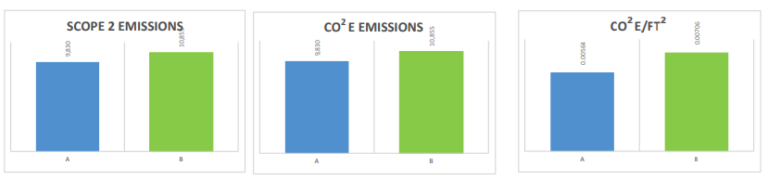
- Performance Comparison
- Compare the total emissions of two selected property groupings side by side with scope breakdown
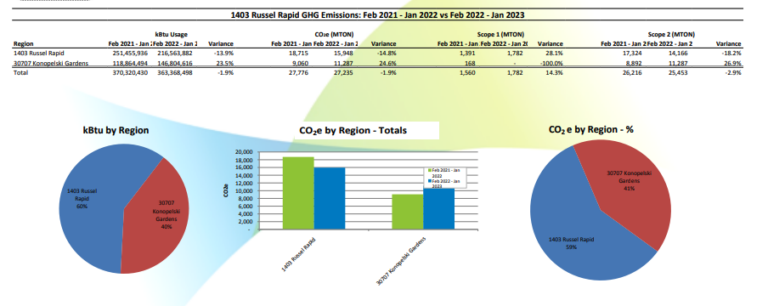
Emissions (GHG)
- Provides a visual overview of CO2 Emissions per region or property
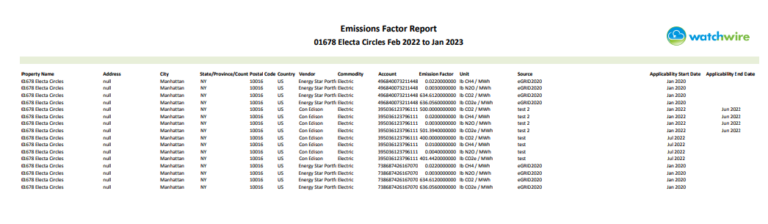
Emissions Factor Report
- Our Emissions Factor report provides the applied emission factors for selected commodities based on site locations over selected time periods, whether you’re using Tango’s default factors or your own custom factors
Emissions Factors:
Tango maintains default emissions factors from multiple standard sources, per below:
- Scope 2 (Electric):
- Scope 2 Location – updated quarterly, the platform uses industry-standard emissions factors across commodities in the US and internationally.
- Scope 2 Market – hierarchy per GHG Protocol Scope 2 Guidance, with default residual factors from Green-e Residual Mix Emissions Rate Tables for US locations
- Scope 1 (e.g. Natural Gas, Fuel Oil, Propane) and other Scope 2 (e.g. steam, chilled water) – EPA Emission Factors for Greenhouse Gas Inventories 2021.
The default Global Warming Potential used in Tango is the Fifth Assessment Report published by Intergovernmental Panel on Climate Change. Users subscribing to Tango’s Sustainability module can set their own custom emissions factors by commodity, node, and/or account. Users can also set their own custom Global Warming Potential if they want to utilize a different version of IPCC.
Use Cases
Sustainability Managers and Analysts will find the GHG emissions reports particularly useful when it comes to tracking their company’s emissions performance over time and identifying areas for improvement. The clear visuals, variety of filters and scope adjustments, and comparative analysis of building performance make complicated data easy to understand and share with C-Suite executives, investors, and stakeholders.
Additionally, sustainability employees may be faced with looming regulatory mandates on GHG emissions reporting, building performance standards, and quasi-mandated investor expectations to report sustainability metrics. Because Tango automatically captures and audits comprehensive utility and emissions data, the platform is known for high data accuracy and data coverage. This will be crucial going forward when GHG emissions reporting becomes more scrutinized for investor-grade data quality and auditable data is the norm.
Other sustainability-focused reports within Tango:
- EnergyStar Report: Graph of EnergyStar scores per building
- Facility Comparisons; Invoice management KPI comparison graph
- Portfolio Analysis: breakdown of consumption
- Quarterly Usage Comparison: quarterly usage K-wattage & cost
- Waste Recycling Diversion: Tonnage, refuse
Importance
This feature is important for clients that value clear visualization and rolled-up summaries of their carbon emissions and sustainability progress based on standardized emissions calculation methodologies and comprehensive and accurate data. Controlling your organization’s greenhouse gas emissions is one of the biggest ways you can combat climate change and respond to the growing number of consumers, investors, and regulators, who may require full-scale GHG emissions inventories within sustainability reporting. Customized carbon emissions inventories and portfolio comparisons based on real-time, audited utility and emissions data points streamline sustainability and energy operationalization efficiency within your organization.
The Reporting Module
Carbon Accounting is only a small piece of the overall functionality available to our users within the Reporting section of Tango Energy & Sustainability. The Reporting Module is capable of generating over 30 standard reports, analyzing consumption, demand, cost trends, weather impact, budget performance, facility comparisons, KPI reports, and more.
- Scope: Time periods are flexible, with users controlling what range of month(s) or year(s) to include in reports. Reports can be generated at the account, property, region, and/or portfolio level to analyze granular data as well as roll-up summary information.
- Filters: Through intuitive filters, users can choose what commodities to include in reports, allowing for reporting in native units as well as summary roll-up on a universal unit basis (e.g. kBtu).
- Integration: Reports display in the platform, but can natively integrate with Microsoft Excel, so exports from WW’s platform maintain all formatting (i.e. no hidden rows/columns, data formatting remains so it’s easy to copy/paste, etc.). Reports can also be exported to .csv and .pdf. Additionally, users can be added to monthly distribution lists to automatically receive (via email) system-generated reports.